
Drywall looks cheap when you’re staring at a stack of sheets in a supplier’s yard.
Then the crew has to carry it in, cut it, hang it, screw it off, tape it, mud it, sand it, and get the surface ready for paint. That’s when the price starts making more sense.
For standard U.S. work, drywall installation cost generally falls between $1.50 and $3.50 per square foot of wall and ceiling surface. Materials often account for about $0.50 to $0.80 per square foot, while hanging and finishing labor can add roughly $1.00 to $2.70 per square foot.
Here’s a quick look at the numbers.
| Drywall Work | Typical Cost |
| Drywall materials | $0.50–$0.80 per sq ft |
| Hanging only | $0.85–$1.90 per sq ft |
| Taping and mudding | $0.35–$1.10 per sq ft |
| Full installation | $1.50–$3.50 per sq ft |
| Ceiling drywall | $1.50–$3.80 per sq ft |
| Old drywall removal | Add $0.50–$2.50 per sq ft |
Those ranges are useful when you need a quick budget. For an actual bid, though, you need the real wall and ceiling quantities, board type, finish level, local labor rates, and job conditions.
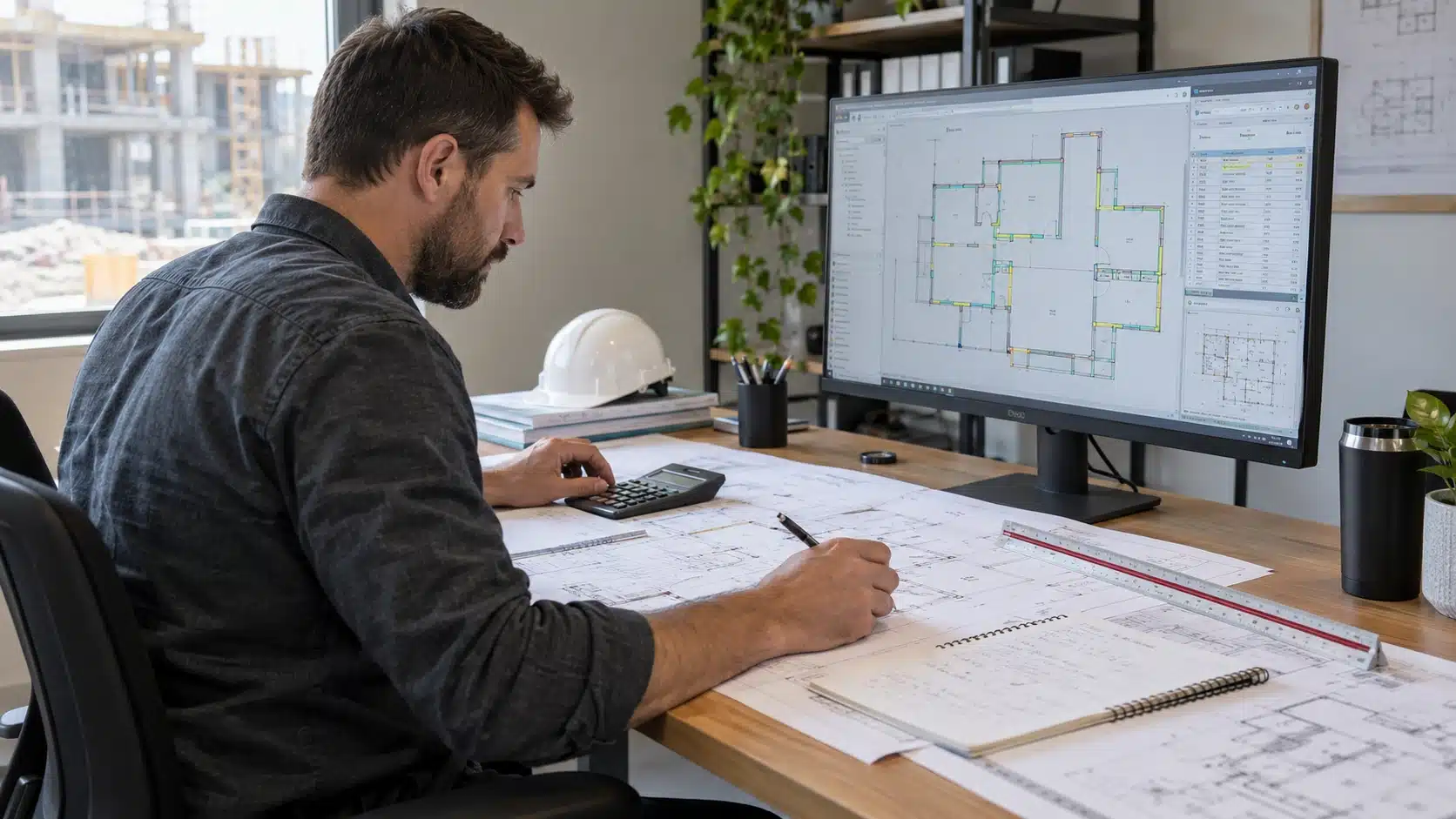
If the scope comes from a plan set rather than one simple room, our drywall estimating services measure the board quantities, ceilings, finishes, accessories, and labor before pricing begins.
What Does Drywall Installation Cost in 2026?
Standard drywall work usually falls between $1.50 and $3.50 per square foot when the price includes materials, hanging, taping, mudding, and a normal finish.
A basic bedroom with 8-foot walls, standard 1/2-inch board, open access, and a normal painted finish should stay closer to the lower side.
Add tall walls, ceilings, Type X board, moisture-resistant panels, tight access, or a higher finish level and that number starts climbing. This is also why two drywall quotes can look very different at first glance.
One contractor may price hanging only. Another may include the board, accessories, hanging, finishing, cleanup, and disposal. Before you compare the numbers, make sure both contractors are pricing the same job.
Drywall Cost Per Square Foot
The drywall cost per square foot only tells you something useful when you know what sits behind the rate. A full installed price may cover the panels, screws, tape, joint compound, corner bead, hanging, sanding, and finishing.
A labor-only price may cover none of the material. So if one quote comes in much lower than another, don’t celebrate just yet. Check the scope first.
The same rule applies to sheetrock cost per square foot. Sheetrock is a brand of gypsum board, but the sheet itself is only one part of the finished wall.
How Material and Labor Split the Total Cost
Materials usually make up the smaller part of the bill. Basic board and accessories may run around $0.50 to $0.80 per square foot, while hanging and finishing labor may add $1.00 to $2.70 per square foot.
And this is where the jobsite starts having a say. A crew can move fast across long, open 8-foot walls. Put that same crew in a stairwell with high ceilings, soffits, closets, and a pile of small cuts, and production slows down pretty quickly. The material may stay the same. The labor won’t.
What Do Hanging and Finishing Add to the Price?
Hanging and finishing are two different parts of the job, and each needs its own labor allowance.
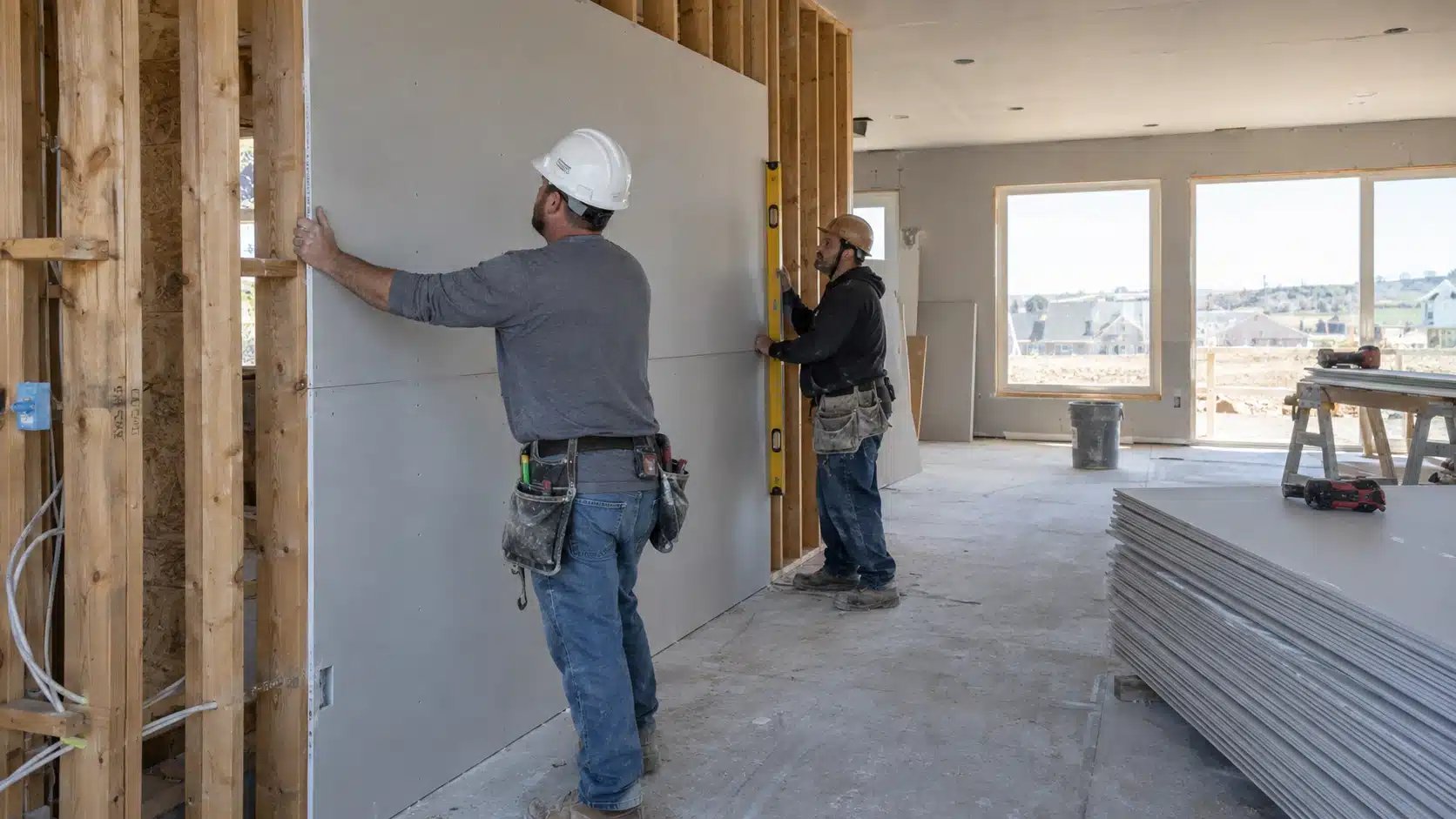
Hanging covers measuring, cutting, lifting, positioning, and fastening the panels to the framing. Standard hanging often runs around $0.85 to $1.90 per square foot before finishing.
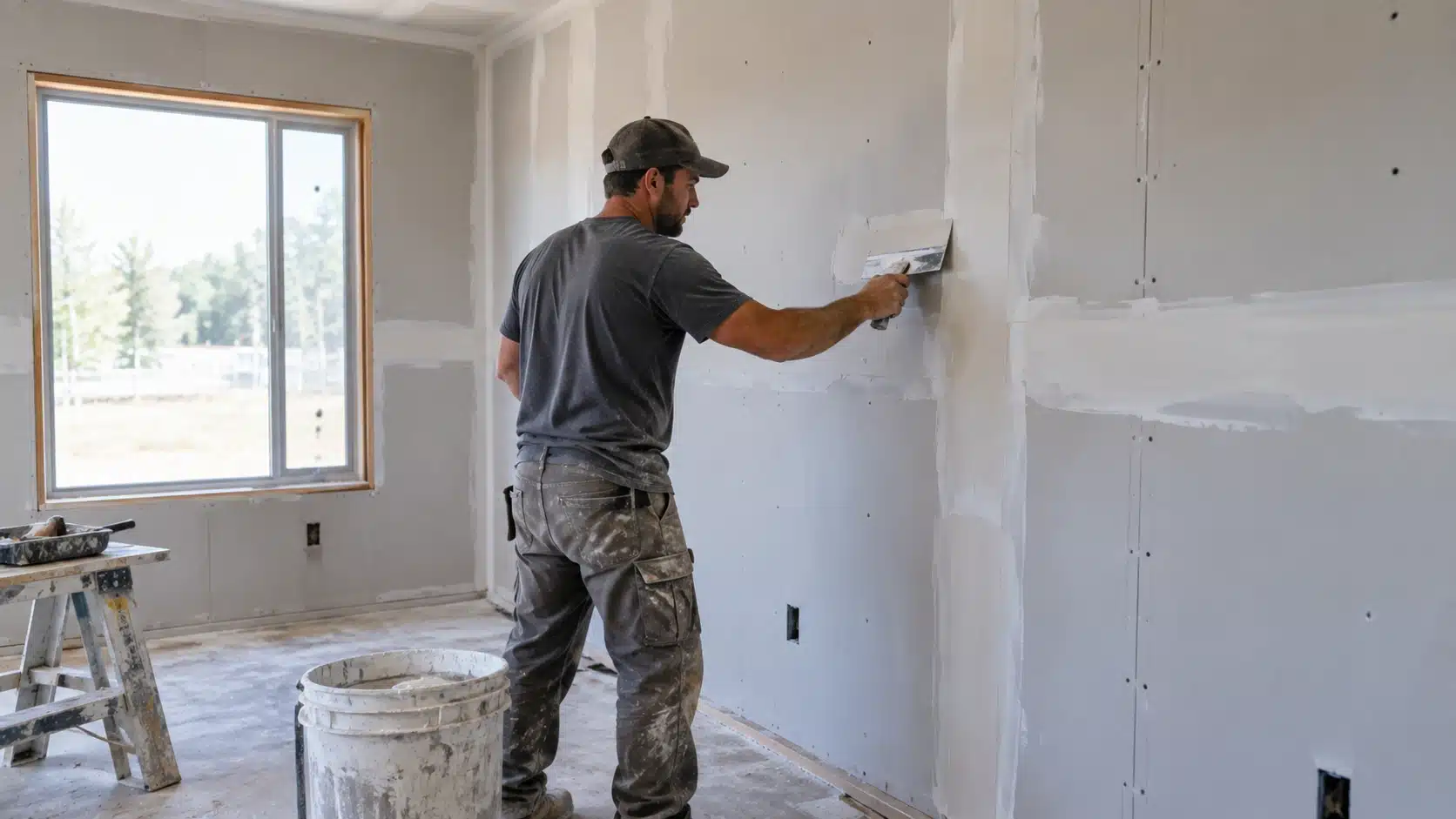
Once the board goes up, the finisher takes over. That means taping the joints, applying compound, covering fasteners, treating corners, sanding the surface, and getting the wall ready for its final finish. Taping and mudding commonly add around $0.35 to $1.10 per square foot.
How Finish Level Changes the Cost
Not every wall needs the same amount of finishing work. Level 4 works for many painted residential and commercial interiors. The crew treats the joints, corners, fasteners, and accessories until the surface is ready for normal paint.
Level 5 takes another step. The finisher applies a skim coat across the drywall surface, which means more material, more labor, and more time.
Rooms with strong side lighting, dark paint, glossy finishes, or high-end interiors may call for that extra work. The board quantity has not changed, but the labor definitely has.
Which Factors Have the Biggest Effect on Drywall Cost?
Most drywall jobs don’t become expensive because of one huge problem. Usually, several smaller things start stacking up.
Board Type and Thickness
Standard 1/2-inch gypsum board works for many interior walls and usually costs less than specialty products.
Fire-rated Type X, moisture-resistant, mold-resistant, sound-control, and impact-resistant panels cost more. Some specialty panels also weigh more, which affects how fast the crew can move them.
If the drawings call for a specific panel, price that panel. Switching everything to a standard board rate might make the estimate look good for five minutes, but it won’t help when the actual material order arrives.
Ceilings and Wall Height
Ceilings usually cost more than standard walls because the crew has to work overhead. Typical ceiling drywall can run around $1.50 to $3.80 per square foot.
Tall walls, vaulted ceilings, and stairwells may also require lifts, scaffolding, or extra handling. Once equipment gets involved, the square-foot rate starts telling only part of the story.
Room Layout and Site Access
Large, straight walls are a drywaller’s friend. Closets, soffits, columns, short partitions, door openings, window openings, stairwells, and awkward corners are not.
Every extra cut takes time. Access matters too. A new construction site gives the crew room to stage sheets and move around. An occupied building may need floor protection, dust control, smaller deliveries, limited working hours, and extra cleanup. Same drywall quantity. Different job.
Removing Existing Drywall
Renovation work may need demolition before the first new sheet goes up. Removing old drywall can add about $0.50 to $2.50 per square foot. Then you open the wall and find out what the last guy left behind.
Water damage, bad framing, mold, or utilities running where they shouldn’t can change the scope once demolition starts.
That’s one reason renovation pricing usually needs a little more breathing room than new construction.
Local Labor and Material Rates
The exact same drywall scope will not cost the same everywhere in the country. Material prices change by supplier and ZIP code. Labor rates change by market.
Urban projects may also bring parking costs, elevator schedules, restricted delivery hours, union requirements, higher disposal fees, or building access rules.
National averages are fine when you need a starting number. For the final bid, local rates matter.
How Much Does Drywall Cost by Room?
Room pricing gets confusing when people use the floor area as the drywall area. A 12-by-12 room has 144 square feet of floor. It does not have 144 square feet of drywall.
| Project | Typical Cost Range |
| 5 × 8 bathroom | $300–$1,000 |
| 12 × 12 bedroom | $580–$1,800 |
| 16 × 20 living room | $850–$3,100 |
| 20 × 20 garage | $1,000–$3,900 |
| 1,500 sq ft house | $5,500–$22,000 |
| 2,000 sq ft house | $8,000–$30,000 |
Whole-house ranges get wide because floor area tells you very little about the actual wall quantity.
A house also has interior partitions, closets, hallways, ceilings, stair walls, and sometimes several different wall assemblies.
Example: Cost to Drywall a 12 × 12 Room
Take a 12-by-12 bedroom with an 8-foot ceiling. The four walls have a 48-foot perimeter:
48 × 8 = 384 sq ft
Now add the ceiling:
12 × 12 = 144 sq ft
That gives you 528 square feet of gross drywall surface before you adjust for doors and windows. At $1.50 to $3.50 per square foot, the early budget comes to roughly $790 to $1,850.
That still isn’t the final quote. The contractor needs to check openings, waste, board type, finish level, ceiling conditions, and local labor rates before putting a real number on the job.
How Do Contractors Calculate Drywall Cost From Plans?
The basic math isn’t difficult. Making sure you measure everything correctly is where the work starts.
For walls:
Wall area = length × height
For ceilings:
Ceiling area = length × width
A standard 4-by-8 drywall sheet covers 32 square feet.
So if the drawings show 1,000 square feet of board area:
1,000 ÷ 32 = 31.25 sheets
Round up before adding waste.
From there, the estimator checks the layout and adds the material needed for cuts, damaged sheets, corners, and odd wall sections.
Then come the items that are easy to miss: tape, joint compound, fasteners, corner bead, sealants, specialty trim, hanging labor, finishing labor, equipment, delivery, disposal, overhead, and profit.
On a larger set of drawings, quantity takeoff services can separate wall types, ceilings, board layers, soffits, and specialty assemblies before pricing begins.
What Should a Drywall Estimate Show?
A drywall estimate should make it easy to answer one basic question:
What exactly am I paying for?
It should show the wall and ceiling quantities, board type, thickness, number of layers, sheet quantity, waste allowance, accessories, hanging labor, finish level, finishing labor, equipment, demolition where required, disposal, assumptions, and exclusions.
The exclusions matter just as much as everything else.
Painting, insulation, framing repairs, electrical changes, plumbing work, and mold treatment may sit outside the drywall contract.
Two quotes can look like they are $5,000 apart until you find out one contractor included ceilings and finishing and the other one didn’t. That’s not really a cheaper quote. It’s a different scope.
FAQs
How Much Does Drywall Cost Per Square Foot?
Standard installed drywall usually runs around $1.50 to $3.50 per square foot of wall and ceiling surface. The final number depends on board type, labor rates, finish level, wall height, ceiling work, and site conditions.
How Much Does It Cost to Install and Finish Drywall?
A full installation that includes board, hanging, taping, mudding, sanding, and a standard finish often falls within the $1.50 to $3.50 per square foot range.
Specialty panels, high walls, ceiling work, or Level 5 finishing can push the price higher.
How Much Does It Cost to Drywall a Room?
A typical 12-by-12 bedroom may cost around $580 to $1,800, although ceiling height, openings, board type, finish level, and local labor rates can move the total.
Remember that contractors price the wall and ceiling surface, not just the room’s floor area.
How Much Does It Cost to Drywall a Ceiling?
Standard ceiling drywall often runs around $1.50 to $3.80 per square foot.
High, vaulted, curved, or difficult-to-reach ceilings can cost more because crews need more handling time and may need lifts or scaffolding.
How Much Does 1,000 Sq Ft of Drywall Cost?
If the 1,000 square feet refers to actual wall and ceiling surface, a $1.50 to $3.50 installed rate gives an early budget of about $1,500 to $3,500.
If 1,000 square feet refers to the floor area of a house, don’t use that calculation. The actual drywall surface will be much larger.
How Much Is Drywall Per Sheet?
A standard 4-by-8 sheet covers 32 square feet. The sheet price depends on thickness and product type. Standard board usually costs less than fire-rated, moisture-resistant, mold-resistant, or sound-control panels.
Getting the Final Price Right
Square-foot rates are useful because they tell you whether the job is somewhere in the right price range. But they are still shortcuts.
The real number comes from measuring the walls and ceilings, checking the board types, confirming the finish level, adding waste and accessories, and applying the correct labor and material rates for the job location.
If you already have a set of drawings, you can get your drywall estimate based on the actual project scope rather than a rough allowance.


