
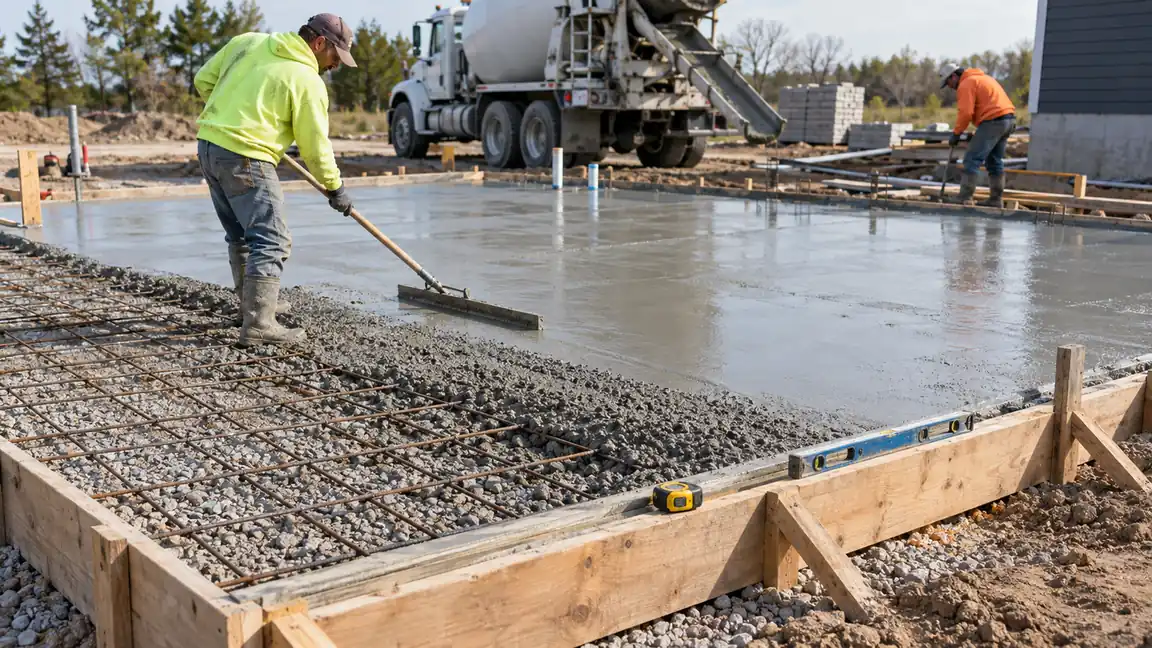
Concrete looks straightforward when the job is still a rectangle on a drawing. Then you start pricing excavation, gravel base, forms, reinforcement, ready-mix, delivery, crew, finishing, joints, and cleanup. If the truck cannot reach the pour, pumping or extra handling gets added too.
That is why concrete slab cost can move so much from one project to another even when the square footage looks almost identical.
For a standard residential slab in the U.S., a practical 2026 planning range is about $6 to $12 per square foot installed. Ready-mix concrete itself commonly runs around $160 to $195 or more per cubic yard before project-specific delivery charges and other extras.
| Cost Item | Typical 2026 Planning Range |
| Standard installed slab | $6–$12 per sq ft |
| Concrete and other basic materials | About $3–$7 per sq ft |
| Placement and finishing labor | About $3–$5 per sq ft |
| Standard 4-inch slab | Often $6–$12 per sq ft installed |
| Ready-mix concrete | About $160–$195+ per cubic yard |
| Decorative or heavily reinforced slab | Often above standard pricing |
These ranges work for early budgeting, not final bidding. A contractor still needs the dimensions, thickness, reinforcement, concrete strength, base requirements, finish, access, and project location before putting a real number on the work.
For projects that come from drawings, our concrete estimating services measure slabs, footings, concrete volume, reinforcement, formwork, and related scope before local pricing goes into the estimate.
What Does a Standard Slab Cost Per Square Foot in 2026?
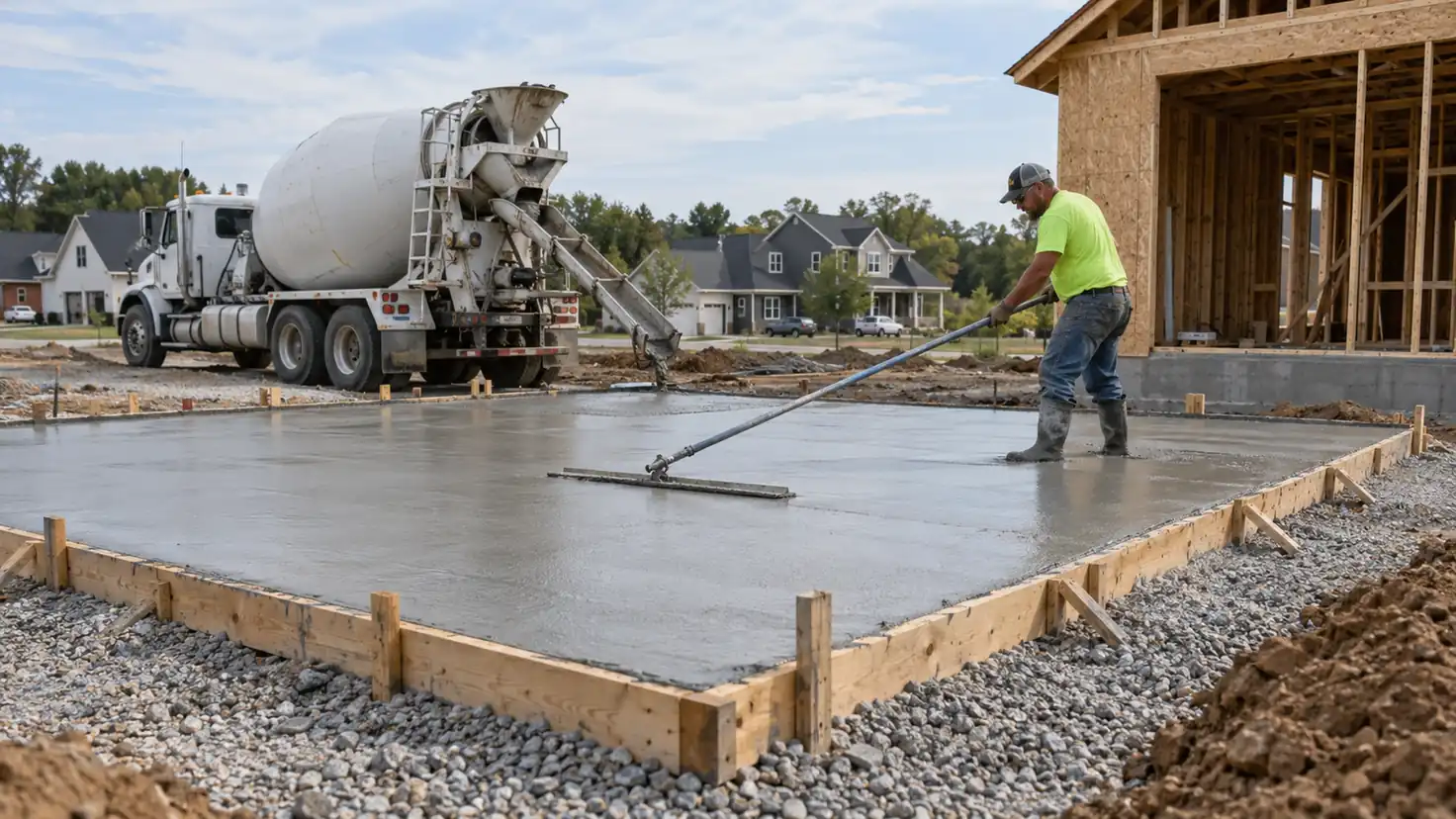
For most standard residential and light commercial work, concrete slab cost per square foot falls around $6 to $12 installed.
The lower side generally applies to simple slabs with good access, standard thickness, basic reinforcement, and a broom or smooth finish. Difficult excavation, thick sections, heavier rebar, pumping, decorative finishes, or poor access can move the rate higher.
It also matters what the quote includes. A $7-per-square-foot price that covers concrete, forms, reinforcement, placement, and finishing is not the same as a $7 rate that starts after the owner has already prepared the site.
Material Cost vs. Labor and Site Preparation
A complete installed price can include ready-mix, gravel or crushed-stone base, reinforcement, form lumber, vapor barrier, joint material, curing products, equipment, labor, and disposal.
The crew also needs time to set forms, place reinforcement, direct the pour, screed the surface, finish it, form or cut joints, and clean the site. That is why a material-only calculation usually understates the finished project cost.
Estimated Price by Slab Size
Square footage gives you a fast starting point for a standard slab.
| Slab Size | Area | Early Installed Budget |
| 10 × 10 ft | 100 sq ft | $600–$1,200 |
| 12 × 12 ft | 144 sq ft | $864–$1,728 |
| 20 × 20 ft | 400 sq ft | $2,400–$4,800 |
| 24 × 24 ft | 576 sq ft | $3,456–$6,912 |
| 30 × 30 ft | 900 sq ft | $5,400–$10,800 |
| 40 × 40 ft | 1,600 sq ft | $9,600–$19,200 |
Those numbers assume relatively standard conditions. A 20 × 20 garage slab with reinforced edges, vehicle loading, and a vapor barrier can cost more than a 20 × 20 patio even though both cover 400 square feet.
Why Small Slabs Often Cost More Per Square Foot
Small jobs sometimes carry a higher effective rate because the truck still has to make the delivery and the crew still has to mobilize, build forms, prepare the base, place the concrete, and finish the slab.
Those fixed costs get spread across fewer square feet. Ready-mix suppliers may also apply short-load charges when the order falls below normal truck volume.
How Thickness Changes the Price
Thickness changes the amount of concrete in the slab, and that affects material, handling, reinforcement, and sometimes excavation.
| Slab Thickness | Concrete per 100 Sq Ft | Common Application |
| 4 inches | 1.23 cu yd | Patios, walks, light-use slabs |
| 5 inches | 1.54 cu yd | Some garage and vehicle applications |
| 6 inches | 1.85 cu yd | Driveways, garages, heavier loading |
| 8 inches | 2.47 cu yd | Heavy commercial or industrial use |
The structural design should determine the required thickness. Cutting thickness just to lower the budget can create a much more expensive problem later.
What Does a 4 Inch Slab Usually Cost?
A standard 4-inch concrete slab often lands around $6 to $12 per square foot installed when the site has reasonable access and the project calls for a basic finish.
The 4-inch concrete slab cost per square foot still depends on reinforcement, base preparation, finish, concrete strength, local labor rates, and placement conditions.
Why a 6 Inch Slab Costs More Than a 4 Inch Slab
A 6-inch slab contains 50% more concrete than a 4-inch slab over the same area.
For every 100 square feet, a 4-inch slab needs about 1.23 cubic yards, while a 6-inch slab needs about 1.85 cubic yards. The overall project does not necessarily cost 50% more because forming, mobilization, and some finishing work stay similar, but the material portion rises noticeably.
What Does Ready Mix Cost Per Cubic Yard?
Ready-mix suppliers sell concrete by the cubic yard rather than by the square foot. Current national pricing commonly falls around $160 to $195 or more per cubic yard, with location, mix strength, delivery distance, and order size affecting the final invoice.
The quoted concrete price may not be the entire delivery bill. Small orders can bring short-load charges, long travel distances can add delivery or fuel fees, and special mix designs or admixtures can raise the material cost.
If a mixer truck cannot reach the placement area, the job may also need a pump.
How Many Cubic Yards Does a Slab Need?
Use this formula:
Length × width × thickness in feet ÷ 27 = cubic yards
For a 20 × 20 slab at 4 inches thick:
20 × 20 = 400 square feet
4 inches ÷ 12 = 0.333 feet
400 × 0.333 ÷ 27 = about 4.94 cubic yards
Add a 10% allowance and the order comes to roughly 5.4 cubic yards.
Ready Mix vs. Bagged Concrete for Small Slabs
Bagged concrete can make sense for small pads, post bases, and minor repairs. An 80-pound bag yields about 0.60 cubic feet, while a 60-pound bag yields about 0.45 cubic feet. That means one cubic yard takes roughly 45 eighty-pound bags or 60 sixty-pound bags.
For larger pours, compare the bag cost and mixing labor with a ready-mix delivery. Hand-mixing stops looking cheap once the job needs several cubic yards.
What Does Installation Labor Cost?
Concrete labor cost for standard placement and finishing often falls around $3 to $5 per square foot as an early planning range. More difficult work can go higher.
Labor may include formwork, reinforcement placement, pouring, screeding, floating, troweling or broom finishing, joint work, curing tasks, and cleanup.
A large open slab with direct truck access gives the crew room to work. Put the same square footage behind a building where concrete has to travel through a pump hose and around obstacles, and the labor picture changes quickly.
Which Site Conditions Can Push the Price Higher?
The ground under the slab can affect the budget before concrete reaches the site. A level, compact, accessible area is much easier to price than a sloped property with soft soil, poor drainage, limited access, or an old slab that needs demolition.
Excavation, Grading and Subgrade Condition
The crew may need to strip soil, excavate high spots, fill low areas, compact the subgrade, or correct unsuitable ground before building the slab.
Poor soil can require deeper excavation or more base material. Those costs never show up when someone simply multiplies square footage by the ready-mix price.
Gravel Base and Drainage
A stable base supports the slab and helps manage movement and drainage. The required depth depends on the design, soil, climate, and use of the slab.
More excavation and a deeper gravel base increase both material and labor.
Site Access and Concrete Pumping
If the ready-mix truck can back directly beside the forms, placement moves quickly. If the slab sits behind a finished building, inside a structure, or far from vehicle access, the contractor may need a pump, buggy, conveyor, or additional crew.
That equipment belongs in the price.
Removing Existing Concrete
Replacement work may start with demolition. The crew has to break the old slab, load the debris, haul it away, and prepare the exposed ground before the new slab goes in.
Reinforced or thick concrete usually takes more effort to remove than a thin unreinforced pad.
How Reinforcement and Concrete Strength Affect Pricing
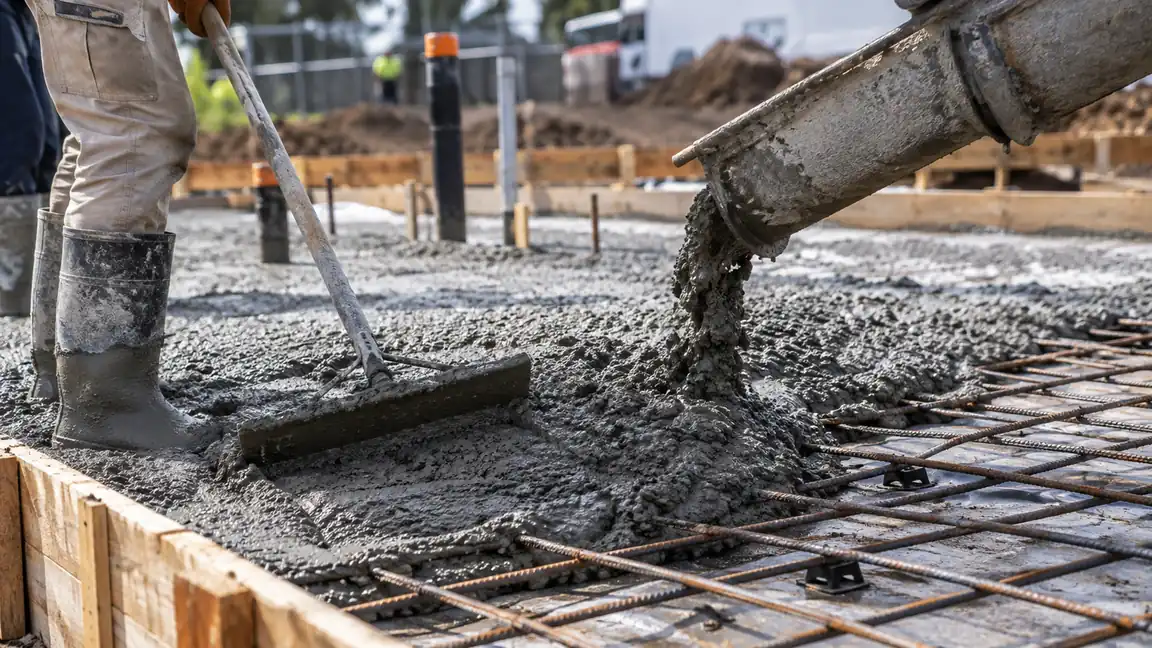
Thickness alone does not tell you how a slab is built.
The drawings may call for wire mesh, fibers, reinforcing bars, thickened edges, dowels, or several of those items together. More reinforcement means more material and more installation time.
Concrete strength matters too. A patio may use a different mix specification from a structural slab, driveway, loading area, or industrial floor. Higher-strength mixes and special admixtures can raise the material price.
The contractor should price the mix shown in the project documents rather than replacing it with a generic concrete allowance.
How Much Does the Finish Add?
A plain broom finish sits near the basic end of the pricing range because crews can produce it without decorative pattern work.
Smooth-troweled surfaces can require more finishing time. Exposed aggregate, integral color, stains, stamping, specialty sealers, and decorative patterns add materials and labor. Decorative work can move well above standard slab pricing, especially when the design calls for several colors or complex patterns.
The slab use should drive the finish. A structural floor that will receive another finish later does not need the same treatment as a decorative patio.
How the Type of Project Changes the Price
Two slabs with the same square footage can have very different specifications.
| Project Type | Typical Thickness | Main Cost Drivers |
| Patio | About 4 in | Finish, access, grading |
| Shed or equipment pad | About 4 in | Small-job minimums, base |
| Garage floor | 4–6 in | Reinforcement, vapor barrier, loads |
| Driveway | 5–6 in | Base, reinforcement, vehicle loading |
| Foundation slab | 4–6+ in | Footings, reinforcement, engineering |
| Workshop or metal building | 4–6+ in | Thickened edges, equipment loads |
| Commercial slab | 6–8+ in | Reinforcement, structural loads, finish |
These are general examples, not design requirements. Structural plans and local code should control the actual thickness and reinforcement.
Monolithic Slab vs. Separate Footing and Slab Work
A monolithic slab combines the floor slab and thickened perimeter or footing areas into one continuous pour. It can reduce separate placements on suitable projects, but it uses more concrete and reinforcement around load-bearing edges.
Other designs use separate footings, stem walls, and slab pours. The lower-cost option depends on engineering, soil, loads, excavation, and local construction methods.
Example: Pricing a 20 × 20 Concrete Slab
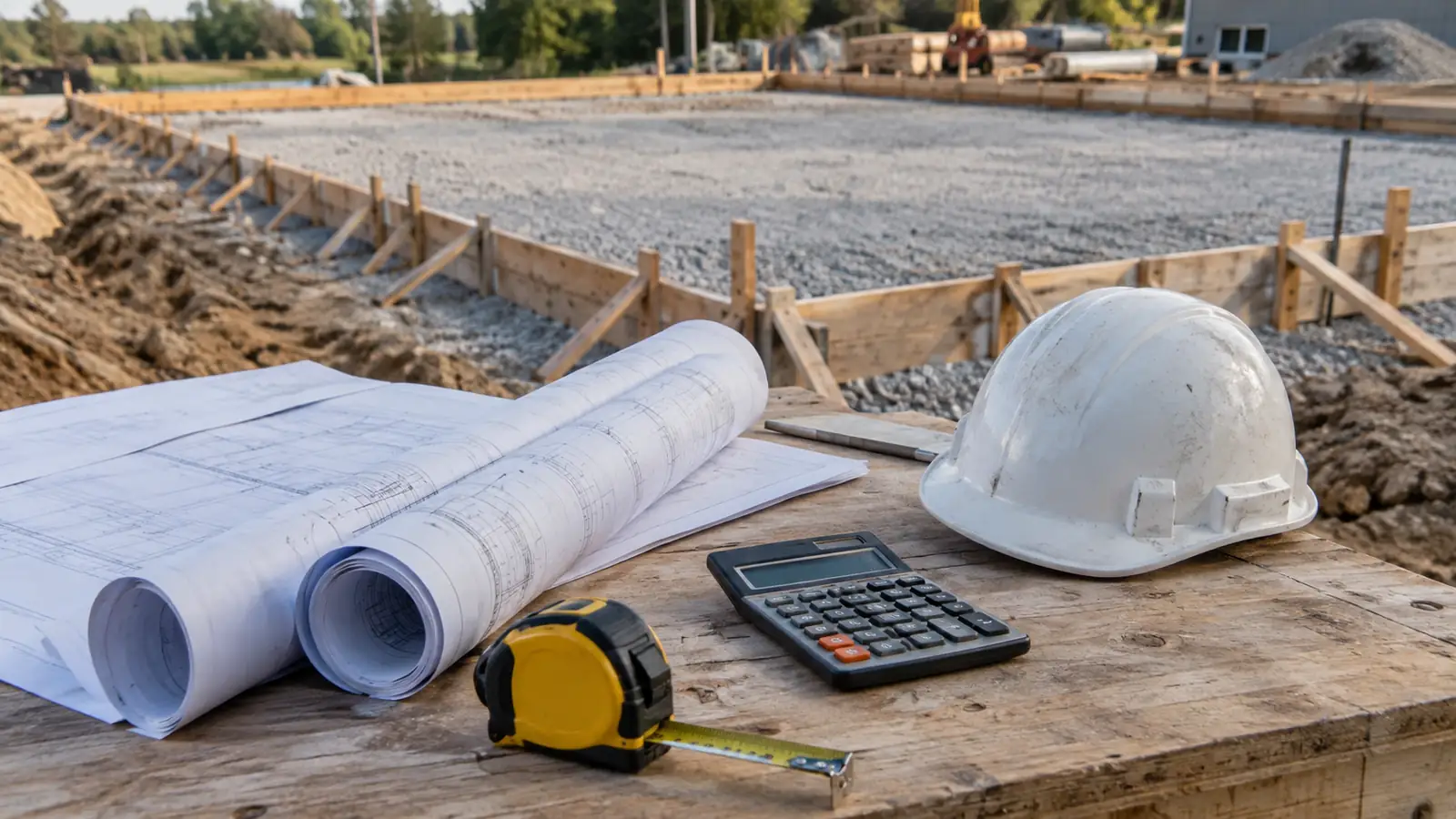
A 20 × 20 slab covers 400 square feet.
At 4 inches thick, it needs about 4.94 cubic yards before waste. With a 10% allowance, the order comes to about 5.4 cubic yards.
At roughly $160 to $195 per cubic yard, the ready-mix portion alone works out to about $865 to $1,055 before special delivery charges or mix upgrades.
Now compare that with the broader installed budget:
400 × $6 = $2,400
400 × $12 = $4,800
The gap between the concrete material and the installed total accounts for the base, forms, reinforcement, labor, equipment, finishing, and other site work.
For larger drawings, quantity takeoff services can measure slab areas, thicknesses, concrete volume, formwork, reinforcement, and related quantities before unit pricing starts.
How Location, Weather and Timing Affect Pricing
Concrete pricing changes across the U.S. because ready-mix supply, labor rates, fuel, aggregates, transportation, and contractor demand vary by market.
Weather matters too. Hot conditions can speed up setting and change placement planning. Cold-weather work may require heated materials, insulating blankets, enclosures, or other protection.
A project that fits normal working conditions will usually cost less than the same slab poured under restrictive weather or scheduling conditions.
What Should a Concrete Slab Quote Include?
A good quote should identify the slab dimensions and thickness, excavation requirements, base material and depth, concrete strength, reinforcement, formwork, estimated concrete volume, delivery, pumping where required, placement labor, finish, joints, curing or sealing work, cleanup, and major assumptions.
It should also state what the contractor left out. Permits, demolition, unsuitable-soil removal, drainage, engineering, testing, or winter protection may sit outside the base price.
Two quotes can differ simply because they include different scopes, so compare the line items before comparing the totals.
DIY or Hire a Concrete Contractor?
A small equipment pad or short walkway can make sense as a DIY pour for someone who already knows how to prepare the base, form the slab, place the concrete, and finish it before the mix starts setting.
Larger slabs leave much less room for mistakes. Once the job involves several cubic yards, structural reinforcement, vehicle loading, pumping, large finishing areas, or engineered details, professional placement becomes much more practical.
Concrete does not wait while the crew figures out what to do next.
What Has Changed in Concrete Pricing in 2026?
Ready-mix remains more expensive than it was several years ago because cement, aggregates, fuel, transportation, and labor have all moved upward.
For contractors, the practical point is simple: do not carry an old concrete rate into a current bid. Local supplier quotes and project-specific labor rates matter more than a national average once the job reaches the bidding stage.
FAQs
How Much Is a Yard of Concrete Delivered?
Ready-mix concrete commonly runs around $160 to $195 or more per cubic yard in current national pricing. Small loads, long delivery distances, higher-strength mixes, additives, and pump requirements can increase the delivered total.
How Do I Calculate Cubic Yards of Concrete for a Slab?
Multiply the slab length by its width and thickness in feet, then divide the result by 27.
For example, a 12 × 12 slab at 4 inches thick uses about 1.78 cubic yards before adding waste.
How Many Bags of Concrete Do I Need for a 10 × 10 Slab?
A 10 × 10 slab at 4 inches thick contains about 33.3 cubic feet of concrete.
At about 0.60 cubic feet per 80-pound bag, that works out to roughly 56 bags before waste. A 60-pound bag yields about 0.45 cubic feet, so the same slab needs roughly 75 bags before waste.
For a pour this size, compare the bag cost and mixing labor with a ready-mix delivery.
What Should I Budget for a 12 × 12 Slab?
A 12 × 12 slab covers 144 square feet.
Using a $6 to $12 installed planning range, the project would fall around $864 to $1,728 before unusual excavation, decorative finishing, difficult access, or other extras.
What Should I Budget for a 30 × 50 Slab?
A 30 × 50 slab covers 1,500 square feet.
At $6 to $12 per square foot installed, an early budget would run about $9,000 to $18,000.
A slab this size may need different reinforcement, thickness, equipment, and structural details depending on what the building or slab will support.
How Is Concrete Measured?
Contractors usually measure slab area in square feet but order ready-mix concrete in cubic yards.
Square footage tells you how much surface the slab covers. Cubic yards tell you how much concrete volume the pour requires. Thickness connects the two measurements.
Getting the Concrete Slab Budget Right
A square-foot rate gives you a useful starting point, but the final number comes from the actual project.
The slab area, thickness, concrete volume, reinforcement, base, labor, finish, site access, demolition, equipment, and local pricing all affect the budget. That is why two 400-square-foot slabs can land thousands of dollars apart even when the surface area is exactly the same.
If you have structural drawings, foundation plans, or a concrete scope ready for pricing, you can get your concrete estimate from the measured project quantities instead of relying on a broad square-foot allowance.


