
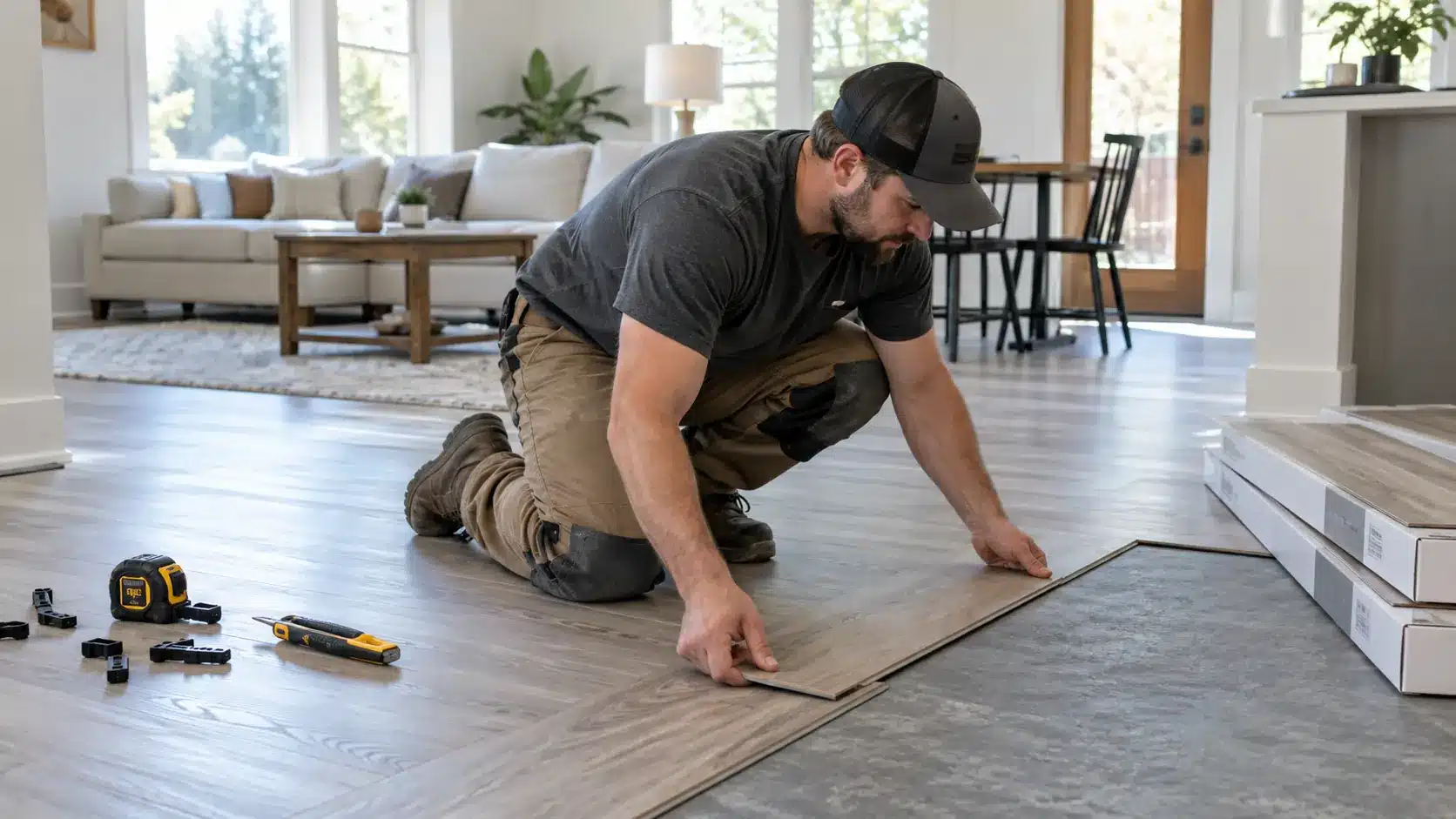
Vinyl plank flooring can look pretty inexpensive when you’re standing in the flooring aisle looking at the price on one box. The problem is that the number on the box only tells you part of the story.
The old floor may need to come out first. The subfloor might need patching or leveling, and you will normally need extra material for cuts and waste. Add transitions, trim, delivery, and installation labor, and that $3 plank no longer means you have a $3 floor.
For a standard project, vinyl plank flooring cost per square foot usually runs around $2 to $7 for the flooring material and roughly $3 to $10 per square foot installed. Luxury vinyl plank can run higher, while straightforward installation labor commonly adds about $1 to $5 per square foot.
Here is a quick breakdown.
| Cost Item | Typical Price Per Sq Ft |
| Standard vinyl plank material | $2–$7 |
| Luxury vinyl plank material | $2–$10+ |
| Standard installation labor | $1–$5 |
| Standard vinyl plank installed | $3–$10 |
| Luxury vinyl plank installed | $4–$16 |
| Old flooring removal | About $1–$2 in many projects |
These ranges work well for early budgeting, but an actual estimate needs the floor area, product type, waste, installation method, subfloor condition, accessories, and local labor pricing. For projects that come from drawings, our flooring estimating services measure those items from the plans before the final price is built.
What Does Vinyl Plank Flooring Cost Per Square Foot in 2026?
The biggest mistake with flooring prices is comparing a material-only number with a fully installed price.
A store may advertise vinyl plank at $2.50 per square foot, but that normally refers to the flooring itself. It may not include installation, waste, removal, floor preparation, transitions, trim, adhesive, or disposal.
For standard vinyl plank, material commonly runs around $2 to $7 per square foot. Once normal installation labor is added, the total usually lands around $3 to $10 per square foot installed. Premium products and more difficult installation conditions can push the final price higher.
Material Cost vs. Labor vs. Installed Price
It helps to break the price into three parts.
Material cost covers the planks themselves. Labor cost covers the crew that lays out, cuts, fits, and installs the flooring. Installed cost combines the flooring and installation labor, but even that figure may not include demolition, major subfloor work, stairs, trim, or other extras.
That distinction matters when comparing vinyl flooring cost per square foot between two quotes. One contractor might quote material and installation only, while another includes removal, preparation, transitions, and cleanup.
The numbers can look far apart even when both contractors priced the work correctly. They may simply be pricing different scopes.
How Does the Flooring Type Affect the Price?
Not every vinyl plank falls into the same price range. Thickness, wear layer, core construction, finish, backing, and product grade all affect what the material costs.
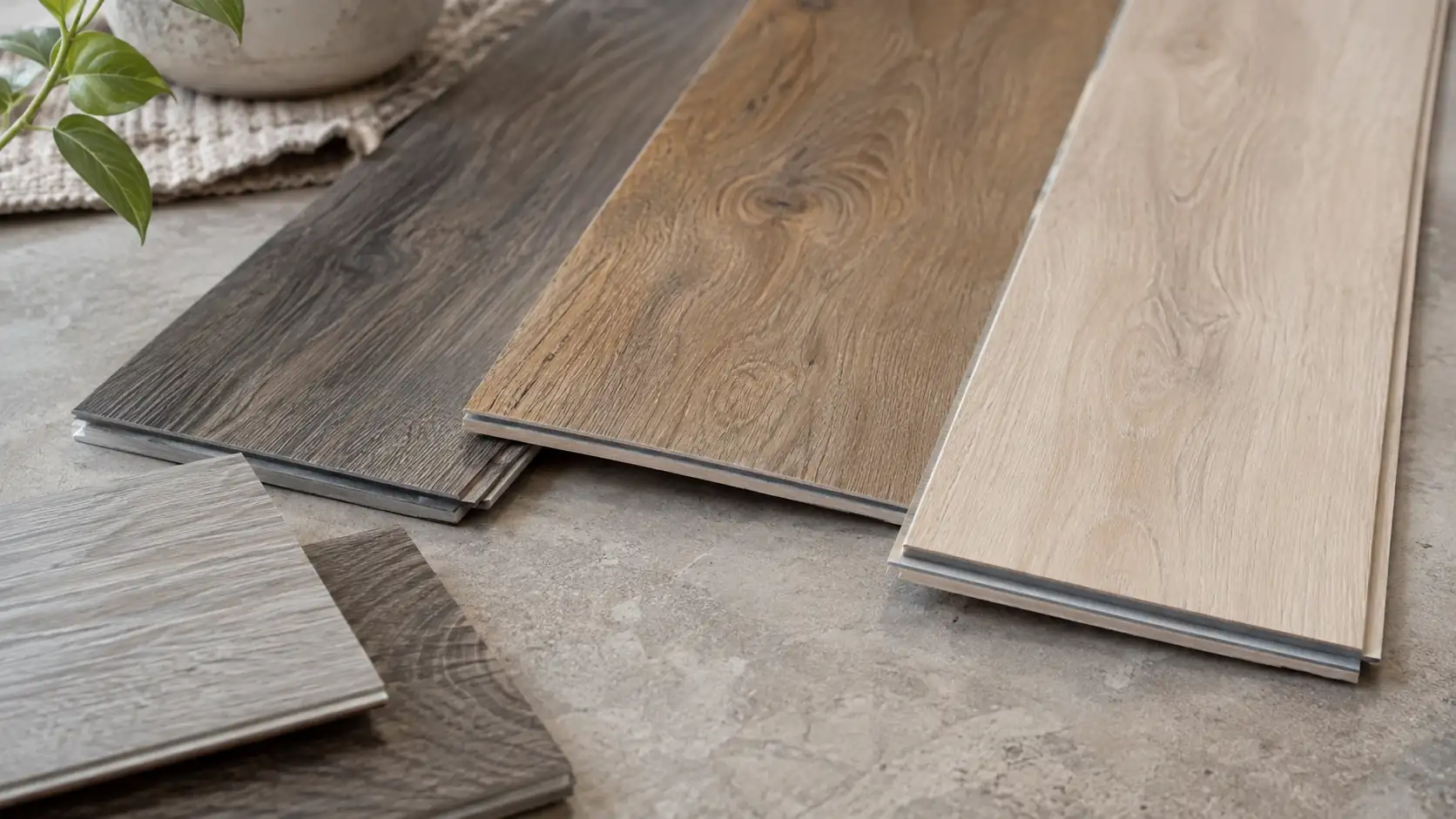
Once the product changes, the installed price changes with it.
Standard Vinyl Plank
Standard vinyl plank generally costs around $2 to $7 per square foot for material. This range covers many entry-level and mid-range products used in residential and light commercial work.
A basic straight-lay installation over a clean, flat subfloor will usually stay closer to the lower end. Better finishes, thicker products, stronger wear layers, and more detailed surface textures move the price higher.
Luxury Vinyl Plank Flooring
Luxury vinyl plank usually costs more because these products often use thicker construction, stronger wear layers, better finishes, and more detailed wood or stone patterns.
Material commonly falls around $2 to $10 per square foot, while installed pricing often lands around $4 to $16 per square foot.
The higher price does not come from the word “luxury” alone. The wear layer, locking system, overall thickness, backing, core, finish, and brand all affect the material price.
SPC and WPC Rigid Core Flooring
Rigid core products tend to sit in the middle and upper part of vinyl plank pricing.
SPC uses a dense stone polymer core, while WPC uses a softer composite core. Both generally cost more than basic vinyl because the planks use thicker construction and more complex layers.
You do not need a long SPC versus WPC comparison to price the floor correctly. You simply need to know which product the plans or owner call for and price that product instead of assuming all vinyl plank costs the same.
What Does Installation Labor Usually Cost?
Installation labor commonly runs around $1 to $5 per square foot for straightforward work.
That range assumes normal site conditions, a reasonable layout, and a floor that does not need major repair. Stairs, difficult cuts, patterns, tight spaces, occupied buildings, and higher local labor rates can all increase the installation price.
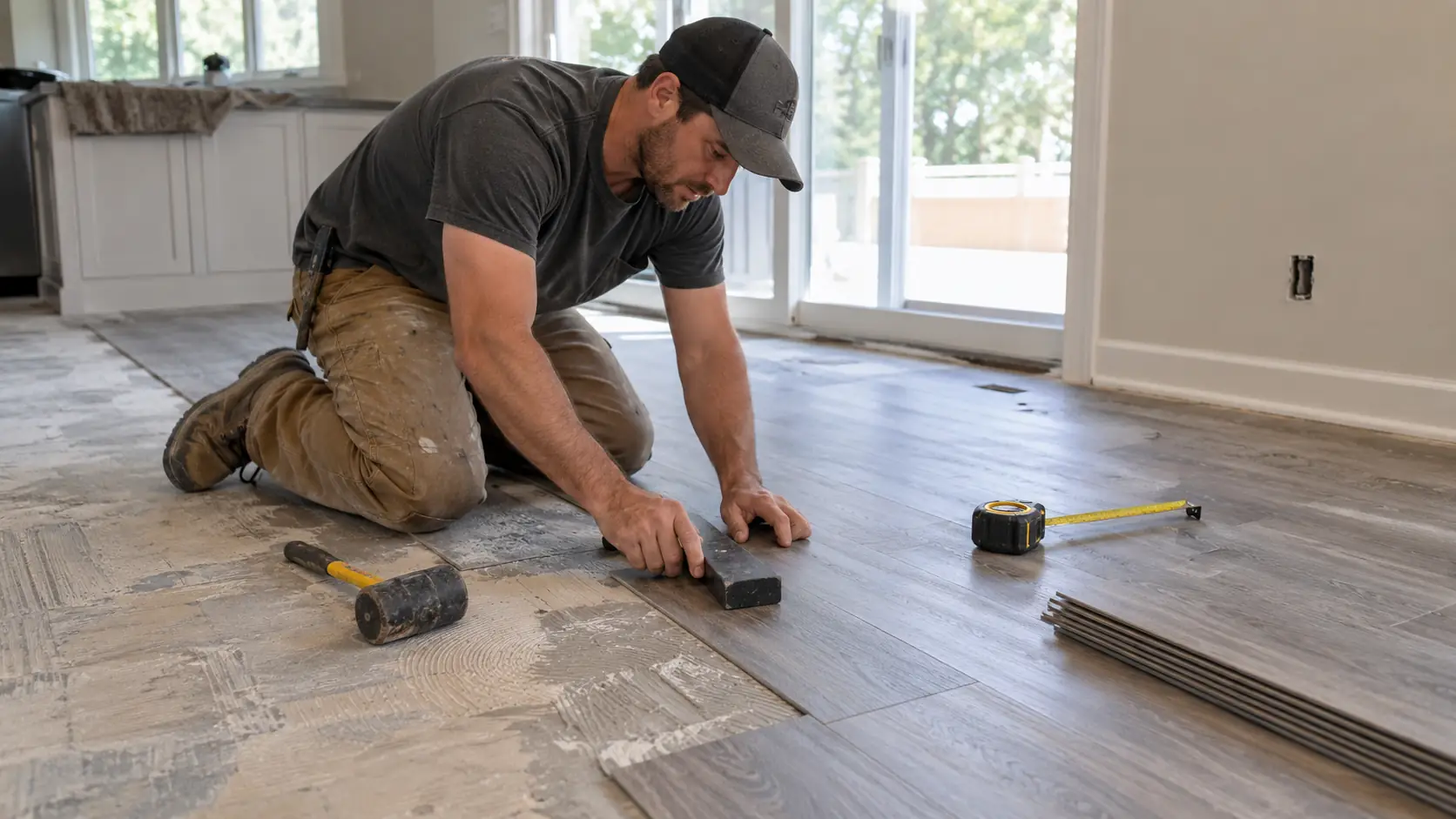
A wide rectangular room lets a crew move quickly. A floor with closets, islands, angled walls, columns, several doorways, and dozens of small cuts takes much longer.
The material may be the same, but the labor will not be.
How Installation Method Changes Labor Cost
Floating and glue-down floors do not take the same amount of time to install, so the labor rate can change with the flooring system.
Click Lock or Floating Vinyl Plank
Click-lock planks connect at the edges and float over the subfloor instead of bonding across the full surface.
This method can keep labor toward the lower side when the existing floor is flat, clean, and ready for installation. The crew does not need full-spread adhesive, but it still needs to prepare the floor properly.
A click-lock system will not hide a badly uneven subfloor.
Glue Down Vinyl Plank
Glue-down flooring requires adhesive and more control over the substrate.
The installer has to prepare the surface, maintain the layout, spread adhesive properly, and place the planks before the adhesive sets. That extra work can increase both labor and preparation costs.
Which Costs Get Added Before the First Plank Goes Down?
Flooring quotes sometimes look cheap because the number starts at the moment the new plank hits the floor. The problem is that the project may have already created several costs before installation even begins.
Those early items can make a big difference to the final budget.
Existing Flooring Removal
If carpet, tile, hardwood, or another floor already covers the area, someone has to remove and dispose of it.
Many removal jobs fall around $1 to $2 per square foot, although the existing flooring can change that number considerably. Carpet generally comes out faster than tile, stone, or heavily bonded flooring.
Disposal, hauling, and access can add more.
Subfloor Repair and Leveling
Vinyl plank needs a suitable surface underneath it.
Low spots, damaged sheathing, cracks, loose areas, and uneven sections may need patching, leveling, or replacement before the crew starts installing planks. Major subfloor replacement can run around $2.20 to $4.75 per square foot in many projects.
This is one of the easiest costs to miss when someone prices the job from the flooring material alone.
Underlayment and Moisture Protection
Some vinyl products include an attached pad, while others may call for separate underlayment or moisture protection.
The requirement depends on the flooring product, substrate, manufacturer instructions, and project conditions. Check the specification before adding the same underlayment allowance to every project.
Trim, Transitions, Stairs and Other Accessories
Reducers, thresholds, transition strips, shoe molding, stair nosing, adhesive, and similar accessories rarely look expensive one at a time.
Across an entire project, they can add a noticeable amount. Stairs also need more labor because the installer cuts and fits individual pieces instead of moving across one open floor.
Patterns such as herringbone can also create more cuts and more waste.
What Can You Expect to Pay by Room?
Room prices depend more on floor area and job conditions than the name of the room itself.
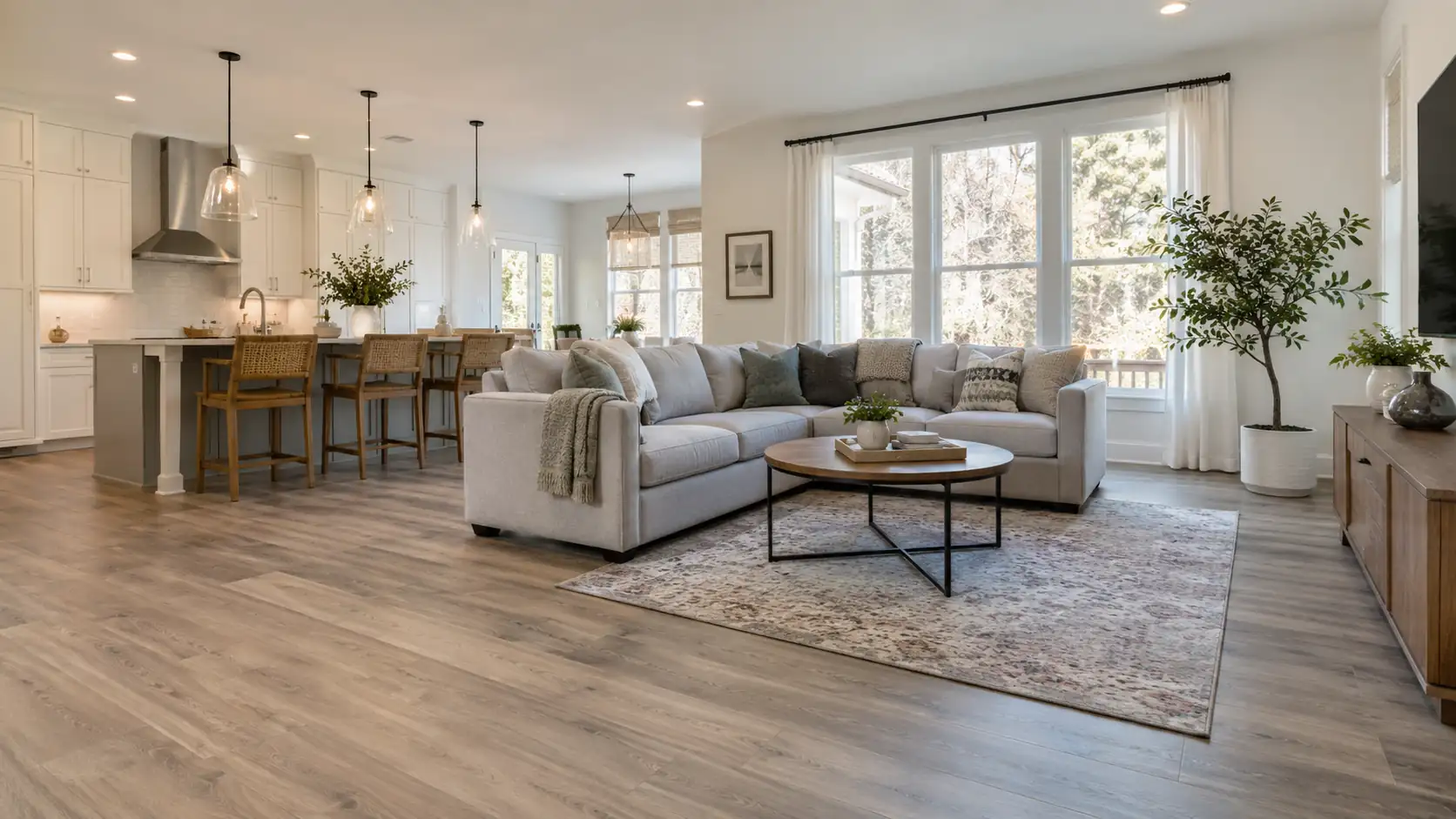
A bathroom may have fewer square feet than a bedroom, but the installer may spend more time cutting around doorways, fixtures, cabinets, and tight spaces.
Using a $3 to $10 per square foot installed range for standard vinyl plank, an early budget might look like this:
| Room | Example Floor Area | Basic Installed Range |
| Small bathroom | 50 sq ft | $150–$500 |
| Bedroom | 150 sq ft | $450–$1,500 |
| Kitchen | 200 sq ft | $600–$2,000 |
| Living room | 300 sq ft | $900–$3,000 |
| Basement | 750 sq ft | $2,250–$7,500 |
These numbers assume the stated square footage actually receives flooring. They do not automatically include major demolition, leveling, stairs, or premium products.
That is why floor area gives you a better starting point than simply counting rooms.
Estimated Flooring Cost by Project Size
Square footage lets you compare projects more clearly because both material and labor normally build from the measured floor area.
For standard vinyl plank, a basic planning calculation looks like this:
| Floor Area | Material at $2–$7 | Labor at $1–$5 | Basic Material + Labor |
| 100 sq ft | $200–$700 | $100–$500 | $300–$1,200 |
| 250 sq ft | $500–$1,750 | $250–$1,250 | $750–$3,000 |
| 500 sq ft | $1,000–$3,500 | $500–$2,500 | $1,500–$6,000 |
| 1,000 sq ft | $2,000–$7,000 | $1,000–$5,000 | $3,000–$12,000 |
These figures work as an early allowance. The product specification, layout, floor condition, accessories, and local rates still determine the final price.
Example: Cost to Install 500 Sq Ft of Vinyl Plank Flooring
Say the project has 500 square feet of net flooring area.
If the layout needs a 10% waste allowance:
500 × 1.10 = 550 sq ft of flooring to purchase
Now assume the selected plank costs $4 per square foot:
550 × $4 = $2,200 material
If installation labor runs $2.50 per square foot on the actual 500-square-foot floor area:
500 × $2.50 = $1,250 labor
That gives:
$2,200 material + $1,250 labor = $3,450
That is the material and basic installation total, not necessarily the final project cost. If the floor also needs demolition, leveling, transitions, new trim, stair pieces, or disposal, each of those still belongs in the estimate.
For larger plan sets, quantity takeoff services can separate flooring areas, room types, transitions, stairs, and other measured quantities before pricing begins.
What Makes the Price Go Up or Down?
Material grade has a big effect on the price. Thicker products, stronger wear layers, better finishes, premium rigid cores, and higher-end brands generally cost more than basic planks.
The condition of the floor underneath can matter just as much. A clean, level subfloor lets the crew start installing quickly, while a damaged or uneven surface turns part of the flooring job into a repair job before the first plank goes down.
Layout affects labor as well. Large open spaces go faster than rooms filled with corners, cabinets, closets, columns, and doorways. Stairs, diagonal layouts, and patterned installations also create more cuts and waste.
Location finishes the picture. Labor rates, supplier prices, freight, product availability, and delivery costs change from one market to another. National averages work for early budgeting, but contractors preparing a bid need local pricing.
How Do Contractors Calculate Flooring Cost From Plans?
A contractor pricing from drawings starts with the floor area, but that number only gives the beginning of the estimate.
The estimator checks each room against the finish schedule, separates flooring types, measures the net floor area, and applies a waste allowance based on the layout. Straight plank installations may need less waste than irregular rooms or patterned layouts.
The estimator then checks the details around the floor, including transitions, stair nosing, base, underlayment, adhesive, moisture protection, floor preparation, and any other specified accessories.
Once those quantities are measured, the contractor can apply the correct material and labor rates instead of using one broad square-foot allowance across the entire project.
What Should a Vinyl Plank Flooring Estimate Include?
A flooring estimate should make it easy to see what the contractor measured and what the price actually covers.
At minimum, it should identify the flooring quantity, product or specification, waste allowance, material cost, installation labor, old-floor removal where required, subfloor preparation, underlayment or adhesive, transitions, trim, stairs, delivery, disposal, assumptions, and exclusions.
The exclusions matter just as much as the included work.
If one quote leaves out demolition and floor preparation while another includes both, comparing only the final number can give you the wrong impression. The cheaper quote may simply contain less work.
Frequently Asked Questions About Vinyl Plank Flooring Cost
What Is the Average Price Per Square Foot?
Standard vinyl plank material generally costs around $2 to $7 per square foot, while installed pricing commonly falls around $3 to $10 per square foot. Premium LVP can cost more depending on product quality and installation conditions.
How Much Do Installers Charge for Vinyl Plank Flooring?
Straightforward installation labor commonly runs around $1 to $5 per square foot. Difficult layouts, stairs, heavy preparation, occupied spaces, and higher local labor rates can move that figure higher.
How Much Does It Cost to Install Vinyl Plank Flooring?
For standard vinyl plank, material and normal installation commonly total around $3 to $10 per square foot. Removal, leveling, trim, stairs, and other project-specific work can increase the final total.
What Does Luxury Vinyl Plank Usually Cost?
Luxury vinyl plank commonly runs around $2 to $10 per square foot for material and $4 to $16 per square foot installed. Thickness, wear layer, core construction, finish, and product grade affect the price.
What Does It Cost to Floor a Typical Room?
A 150-square-foot bedroom at an installed rate of $3 to $10 per square foot gives an early budget of about $450 to $1,500 before major floor preparation or other extras.
Measure the actual floor area first, then add waste and any work outside normal installation.
What Can Increase the Installation Price?
Premium flooring, damaged or uneven subfloors, old-floor removal, stairs, difficult room shapes, patterned layouts, extra transitions, and higher local labor rates can all increase the final cost.
The flooring material is only one part of the job.
Getting the Final Flooring Cost Right
A square-foot rate gives you a useful starting point, but the final price comes from the actual project.
The floor area, product specification, waste, installation method, existing floor condition, preparation, accessories, and local labor rates all affect the number. That is why two 500-square-foot projects can finish at very different prices even when both use vinyl plank flooring.
If you have architectural plans or a flooring schedule, you can get your flooring estimate based on the measured project scope instead of relying on a broad square-foot allowance.


